
English| EUR
Suggested for you
More currencies
Choose a language
Musandam Governorate sits 550 kilometers north of Muscat, separated by a strip of UAE territory. No direct highway exists within Oman's borders. Reaching Khasab requires choosing between a 55-minute domestic flight, a high-speed catamaran, a six-hour overland drive through two international checkpoints, or a packaged tour that handles the logistics for you.
Quick answer
The four established methods to reach Musandam from Muscat are a domestic flight with Oman Air (55 minutes gate-to-gate), a high-speed ferry from Shinas Port (two hours on water, seasonal schedule), private vehicle via UAE Route E11 (approximately six hours including border formalities at Tibat and Ras Al Khaimah), or a coach tour that consolidates transport and permits. Free entry applies to the governorate; actual travel costs depend on your chosen mode, with flights ranging from 25 to 60 OMR depending on advance booking.
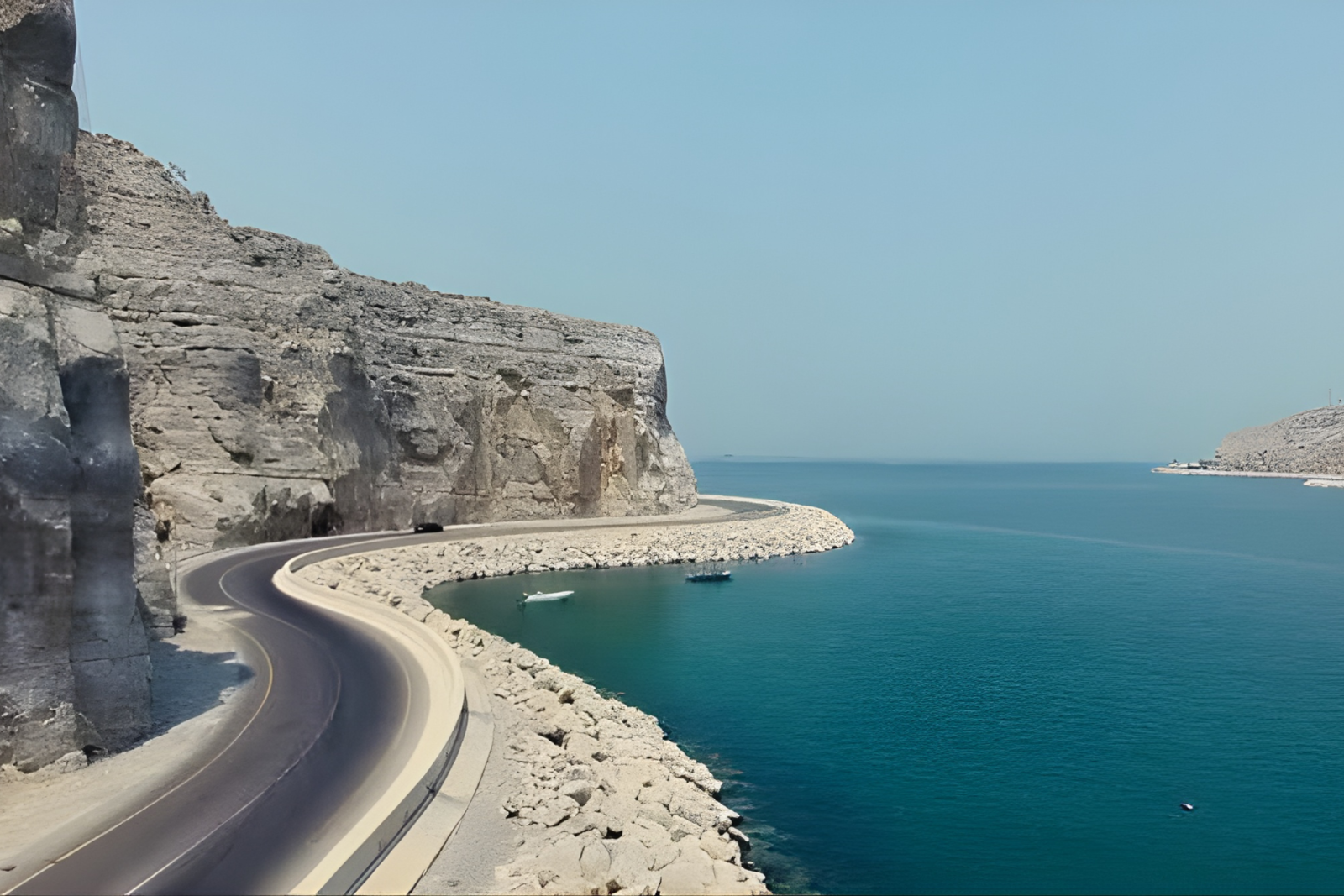
The Musandam Peninsula protrudes into the Strait of Hormuz like a stone finger, geologically part of Oman but geographically cut off by the Hajar Mountains and seventy kilometers of Emirati coastline. That cartographic quirk shapes every route north. Oman Air operates daily flights from Muscat International to Khasab Airport, a single runway pressed against limestone cliffs. The service runs year-round with morning and late-afternoon departures, weather permitting—summer thermals occasionally delay landings. Booking fourteen days ahead typically yields fares near 25 OMR one-way; last-minute seats climb toward 60 OMR. The airport sits three kilometers south of Khasab town center, served by hotel shuttles and taxis. Overland travel follows the coastal highway to Sohar, then inland to the Tibat border post where Oman ends. UAE Route E11 carries you through Ras Al Khaimah emirate before re-entering Oman at the Khasab checkpoint. Two passport stamps, two vehicle permits, two queues. The drive spans 490 kilometers of asphalt and takes five to seven hours depending on border wait times, which peak on Thursday afternoons and Friday mornings. Fuel stations cluster near Sohar and inside RAK; the mountain stretch offers none. Car rental agencies in Muscat require border-crossing insurance; verify coverage for both emirates before departure. The seasonal ferry departs Shinas fishing port—itself ninety minutes northwest of Muscat—bound for Khasab harbor. Service runs October through April when seas calm, with departures Wednesday through Saturday at 08:00. The catamaran carries passengers only; vehicles remain behind. Tickets (15 OMR adult) go on sale two weeks ahead through the port authority office in Shinas, cash only, no advance reservations. Swells in the Strait can suspend service with four hours' notice. Packaged dhow cruises and coach tours bundle transport from Muscat hotels, border paperwork, and return journey into a single daylong or overnight itinerary. These eliminate permit confusion and waiting at checkpoints but lock you to a group schedule. Most operators depart Muscat between 06:00 and 07:00 to maximize daylight in the fjords.
“Two passport stamps, two vehicle permits, two queues—the overland route trades flight cost for border patience.”
Musandam is a geographically isolated exclave of Oman, separated from the rest of the country by the United Arab Emirates. Accessing Khasab from Muscat typically requires either domestic air travel or a road journey involving international border crossings.
Oman Air flight from Muscat (MCT) to Khasab (KHS)
Route 15 from Muscat to UAE border, then E11/E18 toward Khasab
Plan your travel to reach the region during the best arrival window of 08:00–16:00 to ensure optimal daylight for scenic transit and clearance of travel logistics.
The best arrival window is 08:00–16:00 to ensure optimal daylight for scenic transit and the completion of border travel logistics. Planning your journey between October and April provides the most comfortable climate for reaching Musandam.
Mild with temperatures 20°C–30°C
This period offers the most temperate conditions for travel and outdoor activities.
Hot with temperatures 35°C–45°C
High humidity and intense heat occur during these months.
—
Arriving early in the day allows for efficient transit through border checkpoints.
Verdict: The optimal time for your journey is a weekday arrival between 08:00–16:00 during the cooler months of October through April.
Musandam is accessible at all times, though travel logistics and regional transit require coordination. Please plan your arrival within the designated daylight window to ensure a smooth transition to your destination.
Entering the Musandam Governorate requires no admission fee. Financial considerations for your journey are determined entirely by your choice of flight or private transport logistics.
Verdict: A typical traveler pays 0 OMR for entry, with total trip costs varying based on selected transportation method.
Prepare these documents and items before departing Muscat for a smooth border crossing and transit to Khasab.
Everything you need to know about how to go to musandam from muscat
The journey between these regions can be completed by air or by land. Most travelers prefer regional flights for efficiency when considering how to go to musandam from muscat, though ground travel offers a scenic route through neighboring territories.
Yes, Oman Air operates flights to Khasab, which is the primary administrative center. Checking their official site is the best way to verify current flight schedules for your travel dates.
Driving is a common method for those researching how to go to musandam from muscat, but it involves transiting through the United Arab Emirates. Ensure you have the necessary cross-border documentation and vehicle insurance before departing.
Yes, because the land route passes through international borders, a valid passport and appropriate visas are mandatory for all travelers. Always verify current entry requirements before finalizing your transit plans.
The best arrival window is 08:00–16:00 to ensure optimal daylight for your journey and to clear necessary border logistics. Arriving within these hours provides the smoothest transition into the region.
There is an entrance fee of 0 OMR for the region itself, meaning access is free. Note that individual travel costs, such as flight tickets or fuel for private vehicles, will still apply.